
When temperatures plummet, your boiler works overtime to keep your home warm and safe. The worst time to discover a heating issue is during a deep freeze when technicians are booked solid and emergency repair rates apply. Luckily, most winter boiler breakdowns are completely preventable. By taking a few proactive steps before and during the coldest months, you can keep your system running efficiently, lower your energy bills, and prevent a boiler breakdown this winter.
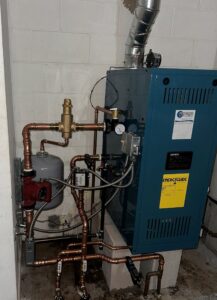
1. Schedule an Annual Pre-Winter Tune-Up
The single most effective way to prevent a breakdown is to have a licensed HVAC technician inspect and service your boiler before peak heating season hits. Our techs at Poormans are well-suited for boilers, with 40+ years of experience. During a professional tune-up, a technician will:
-
Clean the heat exchanger and burners to remove soot and buildup.
-
Test safety controls, ignition systems, and thermostats.
-
Check for subtle gas, water, or carbon monoxide leaks.
-
Inspect the flue and venting system for blockages.
Most manufacturer warranties require proof of annual professional maintenance to remain valid.
2. Bleed Your Radiators
If your radiators are hot at the bottom but cold at the top—or if you hear clanking and gurgling noises—trapped air is blocking hot water from circulating properly. This forces your boiler to work much harder to heat your space.
-
Turn off your heating system and let the radiators cool completely.
-
Use a radiator bleed key (or flathead screwdriver, depending on the valve) to slowly turn the bleed valve counterclockwise until you hear a hissing sound.
-
Hold a cloth or small cup underneath to catch drips. Once water flows steadily without air bubbles, close the valve tightly.
3. Check the Boiler Pressure Gauge
Boilers rely on specific water pressure to circulate heat throughout your home. Over time, pressure can drop due to minor leaks or bleeding radiators.
-
Check the pressure gauge on the front of your boiler when the system is cool. For most residential systems, the needle should sit between 12 and 15 PSI (or 1 to 1.5 bar).
-
If the pressure is too low, your boiler may shut down automatically as a safety precaution. Consult your owner’s manual on how to safely use the filling loop to add water, or call a technician if the pressure drops repeatedly.
4. Insulate Exposed Pipes and Condensate Lines
High-efficiency condensing boilers produce acidic wastewater that drains through a plastic condensate pipe, often routed outside your home. In sub-freezing weather, this pipe can freeze solid, causing water to back up and triggering a boiler shutdown.
-
Wrap exterior condensate pipes and unheated basement pipes in foam pipe insulation sleeves.
-
If your condensate pipe does freeze, you can gently thaw it by pouring warm (not boiling) water over the frozen section or applying a warm compress, then resetting your boiler.
5. Clear the Area Around Your Boiler and Vents
Boilers need adequate airflow to operate safely and efficiently. Over the summer, basements and utility closets easily become catch-alls for storage boxes, paint cans, and seasonal gear.
-
Keep at least 2 to 3 feet of clearance around your boiler unit at all times.
-
After heavy snowstorms, walk outside and check that snowdrifts, ice, or leaves aren’t blocking your exterior intake and exhaust vents. Blocked vents can cause the system to lock out or create dangerous carbon monoxide buildup.
6. Run Your Heat Early in the Season
Don’t wait until the first freezing night to turn on your heat. Fire up your boiler in the fall for 15 to 20 minutes while you’re home to monitor it. This gives you plenty of time to notice odd smells, unusual noises, or sluggish heating before local repair schedules fill up.
Don’t Wait for a Cold Emergency
A little preventative care now saves you from major stress and major repair bills. Not to mention, who wants to go without heat! If your boiler is making strange noises, losing pressure, or hasn’t been serviced in over a year, call the experts at Poormans to schedule your winter heating inspection and keep your home comfortable all season long. Curious about our reputation? Click here to check out our reviews.